GEOLOGY AND MINERAL RESOURCES OF TAJIKISTAN
The Republic of Tajikistan is located in the southeastern part of Central Asia. The area of the country is 142.9 thousand km². To the west and northwest, Tajikistan borders Uzbekistan, to the north — Kyrgyzstan, to the east — China, and to the south — Afghanistan.
In terms of relief, Tajikistan is a typically mountainous country, with absolute surface elevations ranging from 300 to 7495 m. Almost half of the country’s territory is located at an altitude of more than 3000 m. 93 percent of its territory is covered by mountains, which are part of the highest mountain systems of Central Asia — the Tien Shan, Alay, and Pamir-Darvaz ranges. Within Tajikistan, two of the largest orogenic belts of the globe converge: the Paleozoic Central Asian belt and the Mesozoic-Cenozoic Alpine-Himalayan belt.
The territory of Tajikistan has an extremely complex geological structure. Due to the intense manifestations of the Caledonian, Hercynian, and Alpine phases of diastrophism, the main tectonic structures of the territory have been repeatedly renewed, resulting in a mosaic fold-block structure. The rocks comprising the republic's territory are very diverse in age, composition, and structure. Archean sedimentary-metamorphic rocks of very ancient age have been identified. The most widespread are Phanerozoic geological formations.
The geological development history of Tajikistan’s territory is uneven, and based on geological features, several regions can be distinguished, which coincide with the main geological-economic areas of the country:
-
Northern (Kuramin Zone);
-
Northeastern (Fergana Basin);
-
Central (Gissar-Alay);
-
Southwestern (Tajik Depression);
-
Southeastern Tajikistan (Pamir and Darvoz).
Tajikistan’s subsoil is rich in a variety of mineral resources. To date, more than 1,000 deposits and prospective manifestations of more than 50 types of minerals have been identified, explored, and prepared for development.
These are deposits of:
-
Lead and zinc;
-
Copper and bismuth;
-
Antimony and mercury;
-
Precious and rare metals (gold, silver, lithium, beryllium, tantalum, niobium, etc.);
-
Molybdenum and tungsten;
-
Iron, tin, boron, strontium, fluorspar, rock salts;
-
Ornamental, semi-precious, and precious stones, construction stone, and many other types of mineral raw materials for the construction industry;
-
Coal, anthracite, graphite, oil and gas, ozokerite;
-
Underground fresh, thermal, and mineral waters, phosphorites, and several other minerals.
.png)
GOLD
The main metallogenic potential of gold in the country is concentrated in the prospective areas of Northern, Central Tajikistan and the Southern Pamir. Explored reserves are concentrated in the gold-quartz deposits of Central Tajikistan, as well as in gold-quartz and gold-sulfide objects of Karamazar. More than 150 gold ore objects have been identified in the country, most of which are poorly studied. In the Darvaz district, in the Pamir, in the eastern part of the Tajik-Afghan depression, and in the upper reaches of the Zeravshan Valley, dozens of promising alluvial and eluvial-proluvial gold objects have been identified and studied. Speaking of Tajikistan’s gold mining industry, it should be noted that the country possesses significant gold-bearing ore resources.
SILVER
Tajikistan is the largest region of silver ore deposits in Central Asia. Explored and estimated silver reserves amount to more than 100,000 tons. Silver ore deposits are mainly concentrated in Karamazar (Northern Tajikistan), Central Tajikistan, and the Pamir. Currently, one of the largest deposits in the world, Bolshoy Konimansur, has been explored and prepared for development, with estimated and forecasted silver reserves exceeding 70,000 tons. More than 90% of the country’s explored silver reserves are concentrated here. In addition to silver, the ores of this deposit contain lead and zinc (estimated reserves about 10 million tons), copper, gold, antimony, bismuth, tin, and cadmium.
LEAD AND ZINC
The Republic of Tajikistan ranks among the world’s leading countries in lead-zinc ore reserves. In the Karamazar ore district (Northern Tajikistan), about 200 lead and zinc deposits and occurrences are known. The state balance includes reserves of more than 30 polymetallic deposits. These deposits are complex: along with the main elements — lead and zinc — the ores contain silver, copper, cadmium, bismuth, gold, molybdenum, antimony, and fluorite in industrial concentrations, which significantly increases the value of the ores. Only in the Adrasman-Konimansur and Altytopkan ore fields, more than one billion tons of lead-zinc ores have been explored, most of which can be extracted by open-pit mining.
ANTIMONY
Tajikistan ranks third in Asia (after China and Thailand) in explored antimony reserves. The Zeravshan-Gissar mercury-antimony belt of Central Tajikistan has significant metallogenic potential for antimony, concentrated in five ore districts. Currently, the Anzob Mining and Processing Plant operates based on the reserves of the Djizhikrut mercury-antimony deposit. The antimony mineral resource base of the country can be increased several times through the expansion of geological exploration at other ore districts, where promising sites have been identified.
TIN
Tin ores of various genetic types are one of the main metals in Central Tajikistan and the Southern Pamir. The most interesting are quartz-cassiterite-sulfide and skarn ore types. Stannite ores are characteristic. Additionally, cassiterite is the main accompanying mineral in some tungsten ore deposits. Currently, more than 30 tin deposits and occurrences are known, among which the Mushiston deposit in the Zeravshan Valley is the most significant.
TUNGSTEN
Industrial tungsten ore deposits are concentrated in Karamazar (Northern Tajikistan), Central Tajikistan, and prospective sites in the Pamir. Ore formation is mainly skarn and hydrothermal types. Ores contain 0.25–1% WO₃ and, additionally, Sn, Cu, Mo, Zn, etc. About 60 tungsten deposits and occurrences have been identified. The largest is the Maykhura deposit, located on the southern slope of the Gissar Range, 80 km from Dushanbe. The average tungsten trioxide content is 0.91%. In addition to tungsten, the ores contain zinc, copper, bismuth, cadmium in extractable quantities.
COPPER
All copper reserves on the balance sheet are related to complex copper-containing deposits. Copper is a by-product in polymetallic, copper-bismuth-silver, tungsten, copper-gold, and silver-polymetallic ores. In the Darvaz district, two stratiform occurrences of copper-bearing sandstones and conglomerates of the Upper Permian with 1–2% Cu content have been identified. The country’s balance sheet includes about 150 thousand tons of copper in 14 deposits.
ALUMINUM
Aluminum ores are represented by bauxite, alunite, and nepheline syenite deposits and occurrences. Bauxites are known in Central Tajikistan and the Pamir. Ore bodies in nests, lenses, and layers contain on average up to 30% Al₂O₃. Alunite deposits in Karamazar are associated with hydrothermal processing of andesites and andesite-dacites and contain up to 26% Al₂O₃. The largest nepheline syenite deposits are in Central Tajikistan (Turpin, Tutek). Alumina content in large ore reserves reaches 22%.
RARE METALS
Rare-metal mineralizations are known in two geological-economic areas of Tajikistan: Central and Southeastern Tajikistan. They are mainly represented by rare-metal pegmatite deposits, potentially promising in terms of industrial reserves of tantalum, niobium, beryllium, cesium, lithium, tin, rare earth elements of the cerium-yttrium group, thorium, etc., which have strategic significance. In addition, two large occurrences of carbonatites are known: Dunkeldyk in Eastern Pamir and Darai-Pyez in Central Tajikistan. They have high contents of rare-earth elements and large deposits of fluorspar.
GEMSTONES
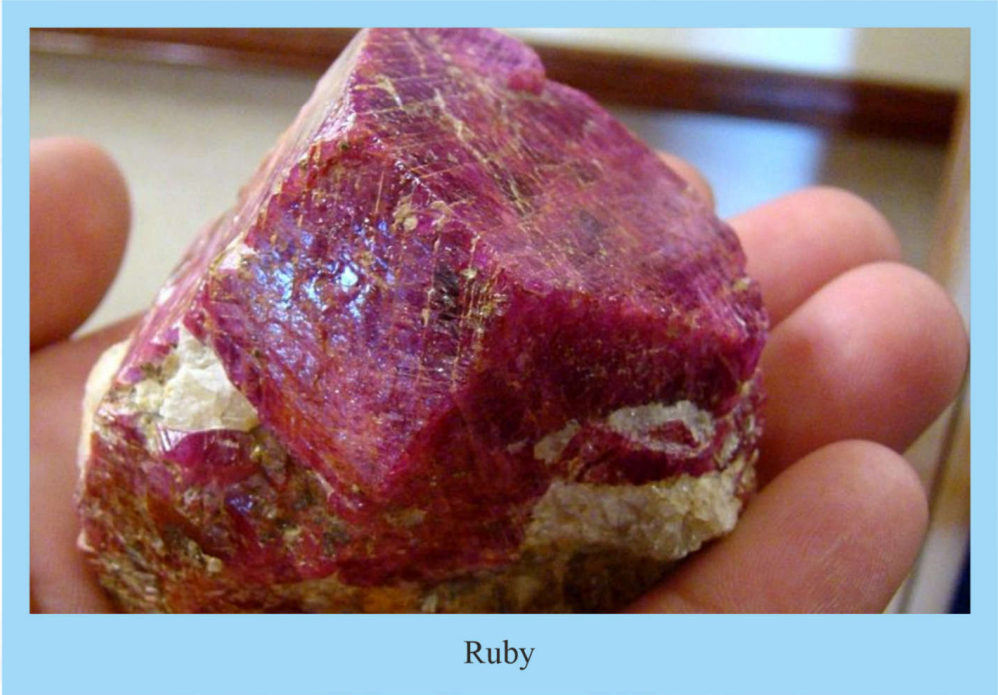
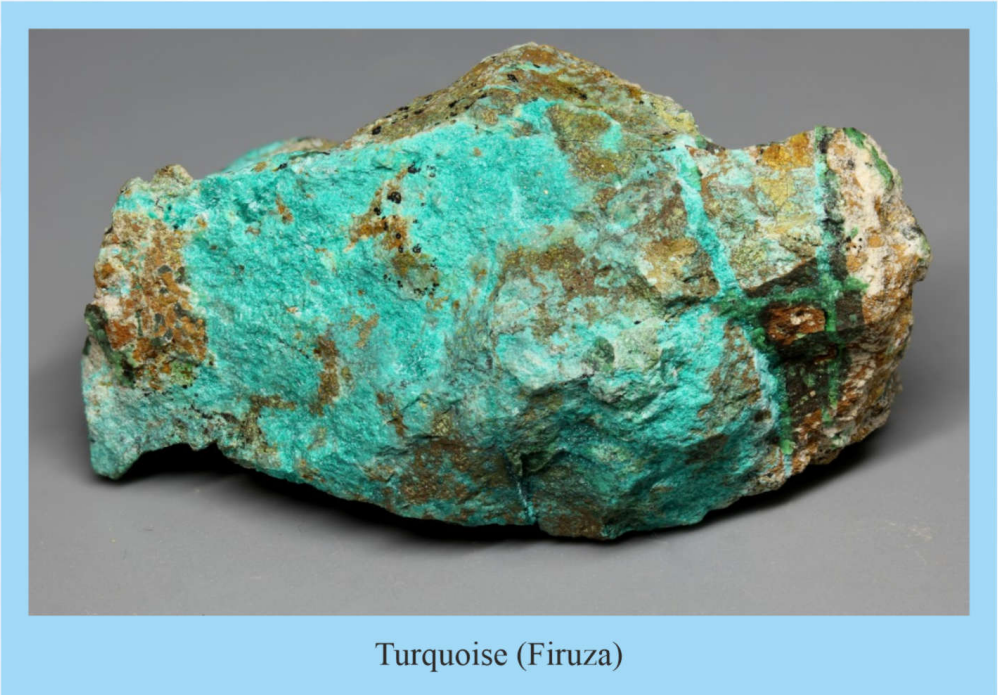
Currently, more than 35 types of gemstones are recorded in the country’s geological balance across 51 deposits, including:
-
26 deposits of precious stones: ruby, spinel, clinogumite, scapolite, cordierite, almandine, amethyst, rock crystal, smoky topaz;
-
12 deposits of semi-precious stones: lapis lazuli, marble onyx, decorative marble, ophiocalcite, goethite, agate, chalcedony, jasper;
-
13 deposits of decorative facing materials: gabbro, serpentinite, marble, limestone, and conglobreccia.
In addition, reserves on newly discovered and developed sites are constantly increasing.
Based on explored mineral resources, industrial enterprises, mines, coal pits, quarries, mining and processing plants, metal processing factories, non-metal processing plants, cement plants, thermal and mineral water complexes, and other facilities have been established. Thus, Tajikistan has enormous mineral resource potential. In addition to known deposits, geological surveys have identified thousands of prospective sites and ore occurrences that require further study.
.png)

MINING AND METALLURGICAL INDUSTRY OF TAJIKISTAN
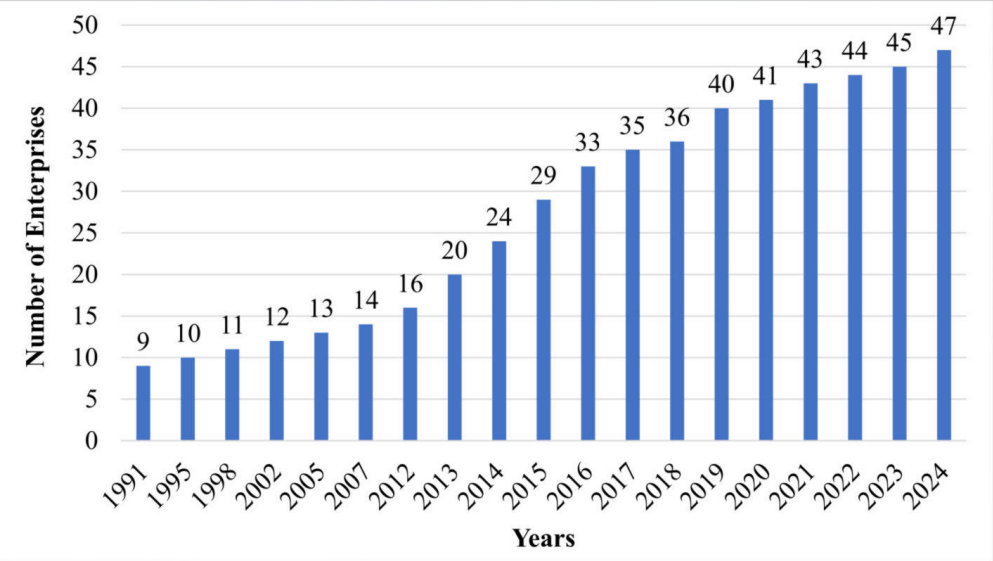
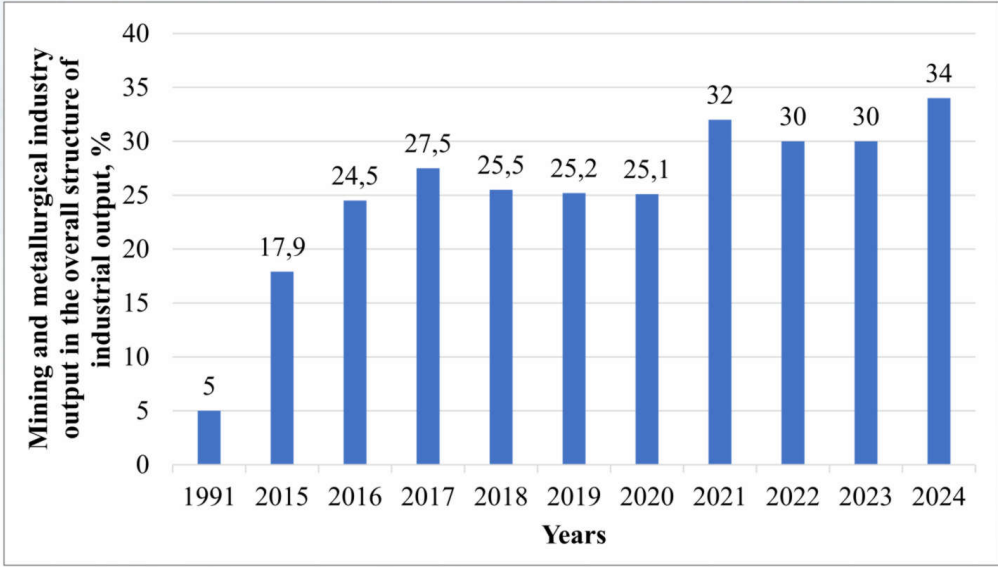
Tajikistan is one of the largest territories in Central Asia in terms of mineral reserves. The country has explored deposits of lead and zinc (East Konimansur, Zarnisor, Paibulok, Zarnisori Shimoli), antimony (Dzhizhikrut, Pindar, Konchoch, Chore, Duoba), tungsten (Maykhura and Takfon), tin (Mushiston), and rare dispersed metals. During the period of independence, due to specific measures to attract foreign investment and develop international cooperation, the capacity of non-ferrous metal mining enterprises increased by $80-90\%$. Their share in the total industry output significantly increased, as evidenced by the creation of 47 enterprises for the extraction and development of such deposits in new forms of ownership and management between 1991 and 2024 (Figure 1 - data as of January 1,2024). Over the years of independence, the mining and metallurgical industry of Tajikistan has become a leader in the structure of industrial production. In 2024, it accounted for more than $34\%$ of the country's industrial production, compared to $5.0\%$ in 1991 (Figure 2).
-
Figure 1: Dynamics of changes in the number of enterprises (1991: 9 to 2024: 47)
-
Figure 2: Mining and metallurgical industry output in the overall structure of industrial output, % (1991: 5% to 2024: 34%)
Thanks to the efforts and support of the President of Tajikistan, the number of enterprises attracting domestic and foreign investment has increased during the period of independence. Among them are 25 enterprises mining gold, silver and non-ferrous metals; 7 enterprises in the field of jewelry and processing of precious and decorative stones; 5 stone processing enterprises. Between 1992 and 2016, 38 enterprises were created and commissioned in the mining and metallurgical sector, including 23 mining and processing plants, 8 jewelry production facilities, and 7 enterprises for the extraction and processing of precious metals and decorative stones.
One of the main strategic directions for the development of mining and metallurgical industry is the implementation of initiatives for developing new deposits. At the end of 1992, the first phase of a processing plant with a capacity of 250,000 tons of ore per year was built for the extraction and processing of ore at the Taror deposit. During the years of state independence, the first and second stages of the enrichment plant with a capacity of 2,000 tons of ore per day, as well as a gold and silver refining plant with a capacity of up to 10 tons per year were put into operation. The commissioning of the gold and silver refining plant made it possible to increase domestic production volumes, create new jobs, form new sources of income, and strengthen the country's export potential.
Thus, despite the fact that the mining and metallurgical sector accounts for $34\%$ of the total industrial output of the country (see Fig. 2), the number of enterprises in this industry does not exceed $2\%$, which indicates the high efficiency of the industry, despite the relatively small number of enterprises. In Tajikistan, mining and primary processing of minerals at several deposits is carried out at enrichment plants, and semi-finished products are processed outside the country. The main products of the mining industry: lead concentrate, zinc concentrate, copper concentrate, antimony concentrate, metallic antimony, silver concentrate. In recent years, state policy has been aimed at attracting investment to create competitive and innovative industries, expanding the range of manufactured products, and increasing the share of deep processing products with high added value. Within the framework of this initiative, the development of new enterprises is aimed at designing full-cycle production capacities from ore enrichment to metallurgical processing of concentrates to obtain high-purity metal raw materials. State support for the creation of metallurgical plants based on existing enrichment plants for deep purification of concentrates and extraction of high-purity metals includes exemption from value added tax (VAT) and customs duties on new technological equipment imported for these purposes.
-
Figure 3: Dynamics of change in the volume of production of the mining and metallurgical industry (1991: 0.04 billion somoni to 2024: 18.2 billion somoni)

-
Figure 4: Dynamics of the share of investment in the mining and metallurgical industry (% of total foreign investment) (2015: 28.6% to 2024: 75%)
Taking into account the above, as well as the enormous potential of the mining and metallurgical sector and its further impact on the country's economy, the National Development Strategy of the Republic of Tajikistan until 2030 (NDS-2030) was developed in 2016. Within this scenario, the foundations of the industrial-agrarian development model will be laid. Accelerated industrial growth based on the introduction of new capacities for the extraction of minerals will become the main driver of national economic growth. Among the main development priorities outlined in the NDS-2030 is the efficient use of natural resources. According to the NDS-2030, exploration and extraction of natural resources (gold, silver, precious stones, etc.) are among the priority vectors of economic growth. In line with these efforts and recognizing the importance of industry for solving economic and social challenges and creating new jobs, the President of the Republic of Tajikistan declared accelerated industrialization as the fourth national goal. Within this fourth strategic objective, the Ministry of Industry and New Technologies has developed various initiatives to support industrial growth. Specifically, for the mining and metallurgical sectors, it is recognized as one of the most important industrial branches.
ADVANTAGES FOR INVESTORS
The Republic of Tajikistan has significant investment potential in industry, energy, agriculture, tourism, infrastructure development, the information technology sector, and these resources create a favorable basis for strengthening trade and economic cooperation with foreign countries. In addition, the Government of the Republic of Tajikistan, in order to strengthen mechanisms for stimulating entrepreneurial activity and attracting investment in the country's economy, has established numerous tax benefits and exemptions in the Tax Code of the Republic of Tajikistan, including:
-
Corporate Income Tax: income of newly created enterprises from the supply of industrial products, if their founders have contributed the appropriate amounts to the authorized capital of such enterprises within 12 calendar months from the date of initial state registration, are exempt from paying corporate income tax for a period of 2 to 5 years;
-
VAT and Customs Duties: import of raw materials for processing and production of final products, with the exception of raw materials produced within the country, production and technological equipment and products based on it, materials and components for the production of medicines, medical equipment, pharmaceuticals and medical products, the latest technologies for pharmaceutical enterprises and modern diagnostic and therapeutic equipment, medicines, with the exception of medicines produced within the country, is exempt from value added tax (VAT) and customs duties;
-
Land Tax: land plots on which renewable energy equipment (with a nominal capacity of 0.1 MW and above) is installed are exempt from land tax for a period of 5 years;
-
Innovation & Technology: Chapter 56 of the Tax Code provides for a simplified taxation system for innovation and technology activities, according to which entities engaged in innovation and technology activities are exempt from paying some taxes within the scope of their activities (with exceptions for social tax, income tax, personal income tax).
-
Additional Tax Benefits: additional tax benefits in priority sectors are provided in accordance with the provisions of the Law of the Republic of Tajikistan "On the State Budget of the Republic of Tajikistan" and the provisions on taxes provided for in investment agreements, in the form of a reduction of up to 50% percent of the tax rate established by the Tax Code for a period of 5 years.
-
Free Economic Zones (FEZ): the subjects of the free economic zone pay only two types of taxes (income tax and social security tax) for their local employees and are completely exempt from paying other types of taxes.
In general, the benefits and incentives provided by law contribute to attracting investment in the country's economy and, in this context, the development of entrepreneurship, the creation of industries, the creation of new jobs, increasing the competitiveness of domestic products, and accelerating the process of digitalization of the national economy.
Information on investment projects can be found on the website www.investcom.tj/.